A crowded closet can make even a favorite hoodie hard to find. Thick fleece, oversized sleeves, and bulky hoods quickly swallow shelf space. Learning how to fold hoodies to save space in your closet can make storage calmer without buying new organizers. The right fold depends on your hoodie’s fabric, size, and where you plan to keep it. A lightweight zip-up may sit neatly in a drawer, while a heavy pullover may need a shelf. Small details matter.
Marie Kondo’s organizing method offers a useful principle: fold garments into compact shapes that stand upright and remain easy to see. This guide turns that idea into ten practical hoodie-folding options, from quick shelf folds to drawer-friendly bundles. You’ll see how to flatten the hood, tuck in loose sleeves, and keep stacks from leaning like a row of dominoes. Try each method with a real hoodie; bulky seams can behave differently than smooth cotton. Some folds may still look uneven. That’s worth noticing, not hiding. A slightly imperfect fold that fits your closet is often more useful than a perfect-looking one that takes too long. Compare the results, choose the method that suits your space, and adjust as your wardrobe changes.
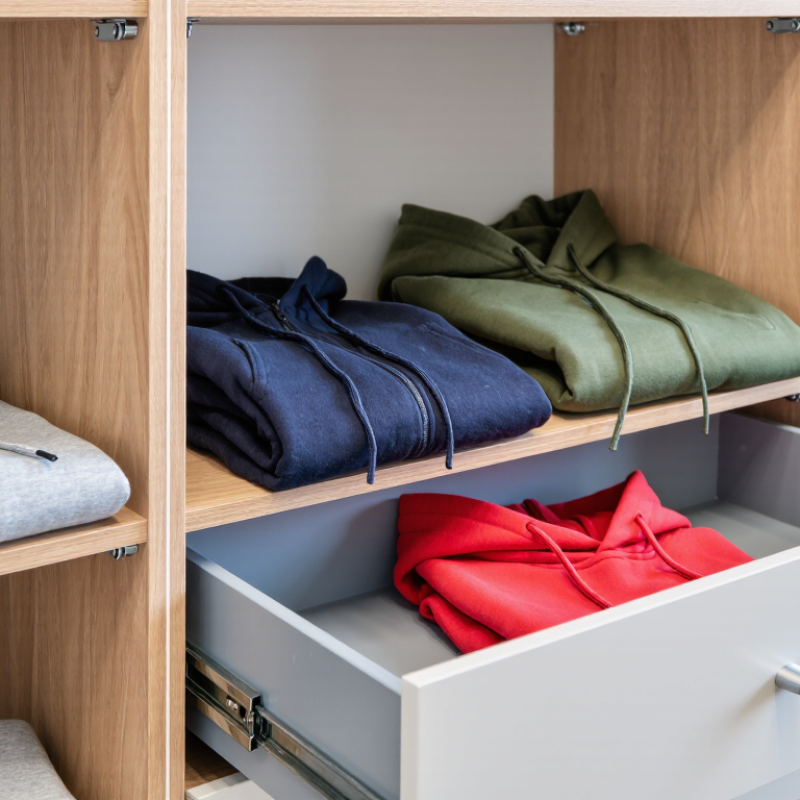
Preparing Hoodies for Space-Saving Folds
Before choosing a folding method, empty every pocket and remove loose objects. A coin can create an awkward bump in a neat stack. Shake out the hoodie, then check for stains, damp areas, or trapped lint. Never fold a damp garment. Moisture can create odors and weaken fabric over time. Fasten zippers and flatten drawstrings before folding. This preparation makes each fold more even and prevents unnecessary bulk.
Fabric type changes the best approach. Thin cotton hoodies usually fold into compact rectangles with little effort. Heavy fleece needs more careful smoothing, especially around the shoulders and hood. Lay the hoodie on a clean, flat surface. Align the seams and gently press out air pockets. Place the hood flat instead of leaving it rounded. I prefer folding the sleeves inward before creating the final rectangle. It keeps the edges cleaner.
Measure the closet shelf before building a stack. A folded hoodie should fit without bending against the door. Stack only a few pieces if the fabric is thick. Too many layers become unstable and difficult to reach. I once compressed a large pile too tightly, and the bottom hoodies became badly creased. That mistake was useful. Leave a little breathing room. Rotate folded hoodies occasionally, and refold them when edges begin slipping. Shelves are not always perfectly level.
A flat fold keeps hoodies stable on shelves and makes each layer visible. Lay the hoodie face down on a clean, flat surface. Smooth the hood, shoulders, and pockets with your hands. Keep it flat. Fold both sleeves inward, creating straight lines along the sides. If the sleeves are long, angle the cuffs slightly toward the hem. This prevents bulky corners from forming. Fold each side toward the center, then bring the bottom hem upward. For shallow shelves, fold the hoodie into thirds instead of halves. The final shape should match the shelf depth, not exceed it.
For stacked storage, place heavier hoodies at the bottom and lighter ones above them. Align the folded edges toward the front of the shelf. This creates a cleaner view and reduces uneven pressure. Leave a small gap above the stack. Compressed fabric can become difficult to remove. Hood cords and thick hoods often create raised spots, so tuck the hood across the chest before folding. Small details matter. My first stack looked tidy but leaned after two days. The problem was uneven sleeve placement.
You can also use a wide flat fold for oversized hoodies. Fold the sleeves across the back, then fold the garment once from the bottom. This method uses less height but needs deeper shelf space. Check the stack after several days. If the top hoodie slides, reduce the stack height or refold the lower layers. I still misjudge bulky fabric sometimes. A flexible method usually works better than forcing every hoodie into one exact shape.
For compact drawer storage, the pocket-tuck fold keeps a hoodie contained without adding another storage box. I have tested this method with cotton, fleece, and lightweight knit hoodies. The fabric thickness changes the final size, so adjust your fold gently. Lay the hoodie face down on a flat surface. Smooth the hood and pull the sleeves straight. Fold each sleeve inward, creating a narrow rectangle across the back. Fold the lower half upward, stopping just below the kangaroo pocket. Keep it relaxed.
Turn the hoodie face up and fold the upper section down toward the pocket. Tuck the folded body into the pocket opening, using both hands to guide the fabric evenly. Do not force thick material through a small pocket. That can stretch the pocket and leave stubborn creases. The finished bundle should sit upright or flat in a drawer, depending on its depth. Store heavier hoodies underneath lighter ones to prevent compression marks.
I prefer placing folded hoodies vertically when the drawer allows it. This makes every color visible and reduces digging. For deep drawers, two compact rows work better than one tall pile. Check the hood before closing the drawer; trapped fabric often creates an uneven lump. Not every hoodie cooperates. Oversized designs may need a looser pocket tuck or a simple half-fold instead. My early attempts were too tight, and the sleeves wrinkled badly. A softer fold usually saves space while protecting the garment’s shape.
Vertical folding makes hoodies easier to see in deep bins and on open shelves. Choose a bin that holds folded garments upright without squeezing them. A quick test helps. Fold one hoodie and check whether it stays standing when you remove its neighbor.
Lay the hoodie face down and smooth the hood, sleeves, and hem. Fold each sleeve diagonally across the back, keeping the cuffs inside the body’s outline. Bring the hem up toward the hood, then fold the bundle in half again to create a compact rectangle. For a thick hoodie, use fewer folds; too many layers can make it spring open. Tuck the hood around the bundle only if it sits flat.
For a shelf, fold the hoodie into a narrow rectangle that fits the shelf depth, then stand it with the folded edge facing up. In a bin, arrange bundles side by side like files, with colors or family members grouped together. Leave a little space at the top so you can lift one out without pulling the row apart. Zip-up styles may need the zipper closed to keep their fronts aligned. Some fabrics still slump, and that is normal; adjust the fold rather than forcing a neat-looking stack.
Estimated space savings compare each method with stacking unfolded hoodies flat in a closet. Vertical folds and compact rectangular shapes generally improve visibility and reduce wasted space in bins and open shelves.
Rolling works best for thin hoodies, while bulky fleece needs a looser bundle. Lay a hoodie face down, fold the sleeves across its back, then fold the body into thirds. Roll from the hood toward the hem, keeping the roll firm but not compressed. Stand each roll upright in a drawer or bin, like books, so colors and cuffs remain visible. For a bundle, place the largest hoodie flat, cross its sleeves over the body, and stack smaller pieces inside before wrapping the outer sleeves around the pile. It is not magic. Thick fabric still takes space, and tight rolling can crease delicate prints.
Textile Exchange’s Materials Market Report 2024 estimates global fiber production reached 124 million tonnes in 2023, making better use of garments already owned a practical storage habit. The U.S. Environmental Protection Agency’s 2018 waste report recorded about 17 million tons of textile waste generated in the United States. These figures do not prove that folding reduces waste, but visible, accessible clothing can make repeat use easier. Try rolling two similar hoodies, then compare their height with a folded stack; keep whichever arrangement lets you retrieve one without disturbing the rest. I would not bundle every hoodie together: a bulky drawstring or zipper may create an awkward lump. Leave a little space around the bundle, and refold it when the fabric begins to slump.
| # | Folding method | How to fold | Best storage spot | Space efficiency | Useful note |
|---|---|---|---|---|---|
| 1 | Compact rectangle fold | Lay the hoodie face down, fold each sleeve across the back, fold the sides inward, then fold the body in half or thirds. | Closet shelf or drawer stack | Moderate | A dependable shape for stacking; align the sides to keep the pile even. |
| 2 | Vertical file fold | Fold the hoodie into a compact rectangle, then make one or two additional folds until it can stand upright on its folded edge. | Drawer or storage bin | High for drawer access | Makes individual hoodies easier to see and remove without disturbing the others. |
| 3 | Classic sleeve-tucked roll | Fold the sleeves toward the center, fold the sides inward, then roll the body from the hem toward the hood. | Drawer, cubby, or suitcase | High | A simple roll fits narrow spaces; keep it loose enough to avoid excessive creasing. |
| 4 | Hem-first tight roll | Fold in the sleeves and sides, turn a small section of the bottom hem inside out, then roll upward and pull the turned hem over the roll. | Travel bag or small cubby | High | The hem helps hold the roll together without a separate tie or fastener. |
| 5 | Crossed-sleeve bundle | Cross the sleeves over the back, fold the sides toward the middle, fold the body upward, and tuck loose sleeve ends into the bundle. | Drawer or shelf | Moderate to high | Keeps sleeves contained and creates a tidy bundle that is easy to move. |
| 6 | Kangaroo-pocket tuck | Fold the sleeves and body into a small rectangle, then tuck the bundle into the front pocket if the pocket is roomy enough. | Travel bag or open storage bin | High for portable storage | Works best with a large front pocket and a lightweight hoodie; avoid forcing a thick garment into it. |
| 7 | Hood-wrapped bundle | Fold the sleeves and body into a compact bundle, then wrap the hood around the folded layers to help keep them together. | Drawer or travel bag | Moderate to high | The hood acts as a soft cover; arrange drawstrings flat so they do not bulge. |
| 8 | Two-stage flat bundle | Make a compact rectangle, then fold it once more across the center to create a thicker, shorter bundle. | Shallow drawer or shelf | Moderate | Useful when drawer depth is limited; thick fleece styles may become bulky when stacked. |
| 9 | Flat stack fold | Fold the sleeves neatly behind the body, fold the hoodie into a broad rectangle, and place it flat with the hood tucked alongside or underneath. | Closet shelf | Moderate | A low-profile option for a small number of hoodies; tall stacks can be harder to access. |
| 10 | Loose travel roll | Fold the hoodie in half lengthwise, place the hood flat, and roll from the bottom toward the neckline without compressing it tightly. | Suitcase or duffel bag | Moderate to high | A loose roll is easier to pack around other items and may reduce sharp fold lines. |
Space-efficiency ratings are relative, not measured percentages. Results vary with hoodie size, fabric thickness, and how tightly the garment is folded. For long-term storage, keep garments clean and fully dry before putting them away.
Empty every pocket and remove coins, lint, and loose objects. Shake out the fabric and check for stains or damp areas. Fasten zippers and flatten drawstrings. Never fold it while damp.
Thin cotton usually forms a compact rectangle easily. Heavy fleece needs careful smoothing around the shoulders and hood. Lay the hood flat. Thick fabric needs more space.
Use a clean, flat surface and align the seams. Press out trapped air pockets gently. Measure the shelf before building a stack. Leave space near the door.
Stack only a few thick hoodies at once. Tall piles become unstable and harder to reach. Heavy layers may create deep creases below. I once compressed a pile too tightly. That was a useful mistake.
Lay the hoodie face down and smooth the hood. Fold both sleeves inward into a narrow rectangle. Fold the lower body upward, stopping below the front pocket. Turn it face up, then tuck the upper section into the pocket.
No. Do not force thick material through a small pocket. Oversized hoodies may need a looser tuck or a simple half-fold. A softer fold often protects the sleeves better.
Rolling suits thin hoodies and lightweight knits. Fold the sleeves across the back, fold the body into thirds, and roll from hood to hem. Keep the roll firm, not compressed. Tight rolls can crease delicate prints.
Stand each roll upright, like books, so colors and cuffs remain visible. Use two short rows in a deep drawer. Leave space around bundles. Refold them when the fabric begins to slump.
This guide explains how to fold hoodies to save space in your closet using practical methods for different storage areas. Start by preparing each hoodie: smooth the fabric, straighten the sleeves, and fasten or flatten the hood so the garment forms a neat shape. For shelves and stacks, use a flat fold that keeps hoodies compact and stable. If you’re storing them in drawers, a pocket-tuck fold can secure the fabric into a tidy bundle that’s less likely to unfold.
For bins and open shelves, vertical folds make it easier to see and reach each hoodie without disturbing the others. Rolling and bundling offer another option when closet space is especially limited, helping create compact, manageable packages. Choose a technique based on your storage space and how often you wear each hoodie, then arrange the folded garments so they remain easy to access.
